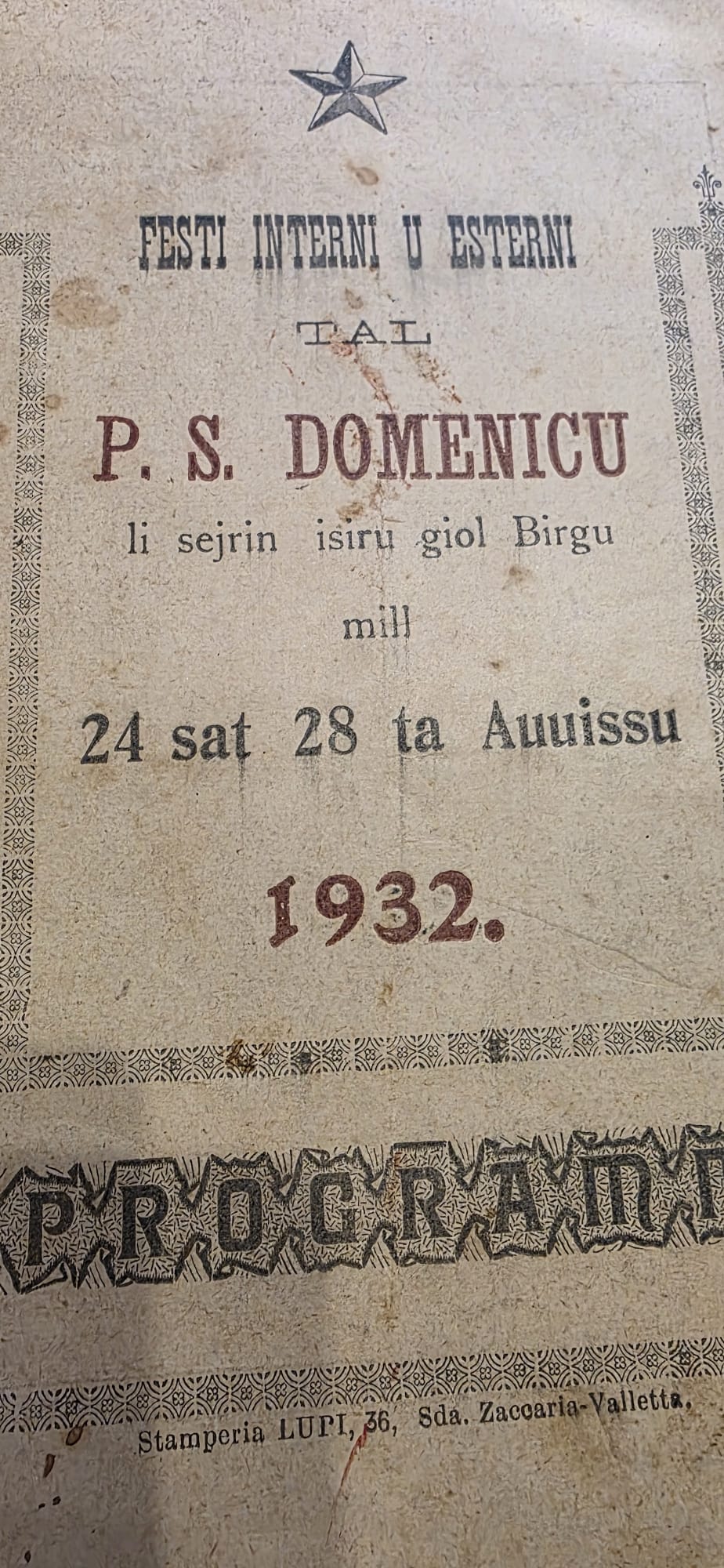

An old “Programm tal-Festa” offers a fascinating glimpse into how the feast of St Dominic in Birgu was celebrated almost a century ago, in the years before the outbreak of the Second World War.
Among the historical documents that help us understand the traditions and customs of Birgu is a festa programme dating back to 1932. The small booklet provides a detailed account of the religious and external celebrations held in honour of St Dominic, revealing a festa that already brought together music, devotion, processions and the participation of several Maltese band clubs.
The programme shows that the external celebrations began on Friday evening with a grand band march by the Prince of Wales Own Band Club. The march started at 9:00 p.m., with the band accompanying the statue of St Dominic from the “Armeria” towards the main square of Birgu. Upon reaching the square, the statue was placed on its pedestal, marking the beginning of the external festivities.
The band was under the direction of Emmanuele Costantino, who led the musical participation on this opening evening.
Music fills Birgu on the eve of the feast
The celebrations continued on Saturday, the eve of the feast, with music once again taking centre stage.
The St Gaetan Band Club of Ħamrun was scheduled to perform a band march followed by a musical programme in the main square of Birgu. The programme also lists the participation of the St Michael Band Club of Żabbar, which performed another musical programme during the same evening.
The musical celebrations continued into Sunday evening, when the St Gaetan Band of Ħamrun and the St Michael Band of Żabbar were joined by the Annunciation Band of Ħal Tarxien. Together, the bands provided marches and musical programmes, adding to the festive atmosphere surrounding the feast of St Dominic.
These details offer an interesting picture of the importance already given to band music in Maltese festas during the early decades of the 20th century. The participation of bands from different localities also shows how festas served as occasions that brought together communities from across Malta.
A deeply religious celebration
While music and the external festivities were an important part of the celebrations, the 1932 programme also demonstrates the strong religious character of the feast.
The solemn religious celebrations included a three-day triduum. During the triduum, the faithful gathered for the recitation of the Chaplet of St Dominic, followed by the singing of the antiphon and Eucharistic Benediction.
On Saturday morning at 7:00 a.m., Mass was celebrated, followed by the singing of the Te Deum.
Later that afternoon, at 5:45 p.m., the programme listed the solemn translation of the relic, followed by Vespers and Compline, concluding with Benediction.
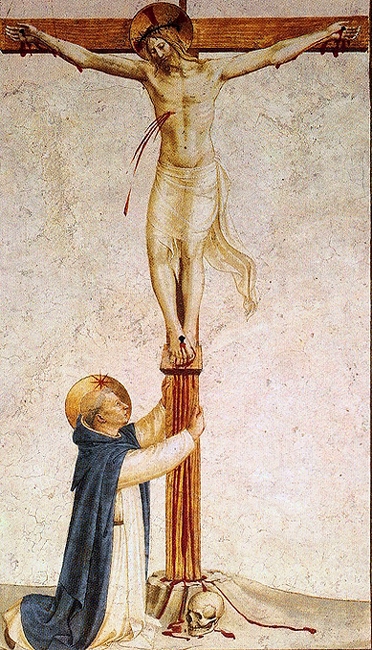
The main feast day, Sunday, began with the solemn Mass at 9:30 a.m. According to the programme, the Mass was celebrated according to the Dominican Rite, reflecting the close connection between the feast and the Dominican tradition.
In the afternoon, at 5:30 p.m., Solemn Vespers were celebrated, after which the much-anticipated procession with the statue of St Dominic took place through the streets of Birgu.
A window into Birgu's festa tradition
The 1932 Programm tal-Festa is much more than a list of events. Nearly a century later, it provides a valuable snapshot of festa life in Birgu at a time when Malta was still under British rule and more than a decade before the end of the Second World War.
Through its pages, we can see the structure of a festa that combined solemn Dominican liturgy with the excitement of band marches, musical programmes, the setting up of the titular statue and the traditional procession.
For Birgu, such an old programme is a precious piece of local heritage. It allows today's generation to look back at how the feast of St Dominic was organised in 1932, and to appreciate the devotion and traditions that have helped shape the festa we know today.
Almost a century later, the pages of this old programme continue to tell the story of a festa that was already deeply rooted in the religious and cultural life of Birgu.